Slide 1
"Versuchungen sollte man nachgeben!
Wer weiß, ob sie wiederkommen"

Oscar Wilde

SEDES SAPIENTIAE 1220 - 50

Sedes Sapientiae
Salzburg
1220-50
Carved lime wood

Polychrome frame
Height 58 cm

Sedes Sapientiae as the seat of wisdom

The Madonna as Sedes Sapientiae (Seat of Wisdom) is one of the central iconographic representations of Mary in medieval art, which probably has its origins in the Byzantine conception. This particular motif of the enthroned Virgin with the Christ Child on her lap emphasizes her role as the Mother of God and the embodiment of divine wisdom. Such images were highly valued for their devotional function, as they reflected the viewer’s devotion to both Mary and Christ through their symbolic, frontal depiction. Devotional sculptures such as these often served as focal points in churches and chapels, inviting prayer and devotion, especially in monastic and religious communities where Marian devotion was encouraged. As Sedes Sapientiae, Mary is depicted not only as the Mother, but especially as the Throne of Christ, emphasizing her unique role in the divine order.

Polychromed wooden sculpture

This Madonna from the Salzburg region, dating from around 1220-1250, is a remarkable example of the tradition of polychrome wood sculpture, which was particularly pronounced in Salzburg and the Alpine regions at this time. The material used, lime wood, was preferred for its softness and fine grain. It enabled the detailed carving, which can be seen in the folds and facial features. The polychromy gives the figures life and an imposing presence, emphasizing both the realism and otherworldliness of the sitter for medieval viewers. This work bridges the gap between the Romanesque style, known for its stylized and symbolic forms, and the emerging Gothic naturalism, characterized by more lifelike figures and expressive faces. The surprisingly well-preserved surface emphasizes the rarity and importance of the sculpture. Finding such a well-preserved version from this period makes this Sedes Sapientiae a museum rarity.

Focus on Mary and the baby Jesus

Mary is depicted sitting on a throne-like bench, dressed in a long, flowing cloak that is pulled over her white dress. White symbolizes purity and divinity.

The inside of the cloak is red, a color often associated with love and sacrifice, which underlines her role as the Mother of the Redeemer.

The crown on her head covers a delicate veil that falls softly over her shoulders. This shawl, combined with her gently wavy hair, which peeks out at the crown of her head, emphasizes Mary’s dignity and elegance. The baby Jesus, also wrapped in a white cloak like his mother’s robe, further reinforces this symbolism. Both colors also emphasize the dual role of Jesus as divine and human. In addition, the red already refers to the Passion of Christ, while the white emphasizes Mary’s role as Queen of Heaven, who presents the Redeemer to the world.

The Christ Child sits on Mary’s left knee and is also clothed. Before 1400, the Christ Child is almost always depicted in clothes to emphasize his sacred role. In his left hand he holds a globe, symbolizing his dominion over the world and showing him as Salvator Mundi. His right hand is raised in a gesture of blessing or speaking, a sign of his divine authority and wisdom. Both Mary and Jesus are facing the viewer directly. The facial expressions of both are open and solemn, with almond-shaped eyes, narrow brows and gently smiling mouths. Their youthful red cheeks lend them a naturalistic character that shows the development of the medieval style towards more expressive, more human figures.

Drapery as a stylistic feature

The drapery is particularly remarkable and embodies the transition from the austere, “wet” style of the Romanesque period to the more animated early Gothic style. The fabric falls in doughy folds that cling closely to the body, emphasizing the shape of the body and at the same time showing the first signs of volume. The cloak wraps around Mary’s right elbow in a bulbous fold, while the fabric hugs her upper body, suggesting a soft texture characteristic of this period. Below the waist, the fabric becomes more linear, falling in straight, parallelizing folds that suggest weight and movement. This can be seen, for example, on Mary’s right knee, where the fabric contracts in a naturalistic way.

Cultural networks: Styria – Salzburg – Bohemia

Comparative pieces from this period illustrate the interconnectedness of Salzburg, Bohemia and the surrounding regions.

A very similar Madonna in the National Museum in Prague, which is dated to Prague in the years 1220-1250, has almost identical compositional details: Mary and Jesus have the same seated position and the bulbous fold around Mary’s elbow as well as her protruding knee correspond to those of the Salzburg Madonna.

However, the Prague Madonna differs from this figure in its facial features. The design of her head is closely based on the regional style from the Alpine region, as can be seen in the Mariazell Madonna in Styria – the important pilgrimage site where the Madonna, from the second half of the 12th century, is venerated as the “Magna Mater Austriae” (Great Mother of Austria).

This Styrian type of Madonna influenced the depictions in Salzburg and underlines the close historical relationship between the regions. If we use this stylistic comparison, it is possible that it was created around or before 1200.

The connection between Salzburg and Styria is also underlined by the foundation of the diocese of Seckau under the archbishopric of Salzburg in 1218, which exerted an ecclesiastical influence that promoted cultural exchange. Salzburg’s long-standing salt trade with Bohemia, which flourished under Archbishop Adalbert III in the late 12th century, also promoted both economic and artistic exchange between the regions. The connection between Salzburg and Bohemia in the early 13th century was deeply rooted in economic, political and religious relations, with the salt trade serving as a central link. Salzburg’s rich salt mines, especially those in Hallein on the Dürrnberg, were an important

resource for the region, as salt was considered “white gold” due to its importance for preserving and seasoning food. This raw material helped the

Salzburg archbishops to wealth and political power, as they owned the mines

and thus gained immense economic advantages. The Salzach was the main artery for the transportation of this valuable resource to the north and east, reaching Bohemia and linking Salzburg’s influence with Central Europe. The merchants, craftsmen and clergy who traveled along these routes brought goods, ideas and artistic styles with them. This exchange is evident in similar religious artworks, including Madonna sculptures, which share similar stylistic and iconographic features in Salzburg and Bohemia, reflecting their common religious and artistic vocabulary.

Political relations between Salzburg and Bohemia were equally important. The Archbishopric of Salzburg possessed significant ecclesiastical authority and its influence often extended to neighboring regions such as Bohemia, creating important networks for the dissemination of religious practices and artistic styles. These connections were not only ecclesiastically based, but were also fostered by alliances between the ruling families. Marriages and diplomatic agreements between the Salzburg archbishops and the Bohemian rulers strengthened these ties and promoted the exchange of ideas between the two regions. This intertwining became even more evident in later centuries with international Gothic art. This Madonna, which predates the so-called “Beautiful Madonnas” of the later International Style, is one of the earliest sculptures to bear witness to the cultural links between Salzburg and Bohemia – evidence of the artistic and religious dialog that flourished through the trade routes and shared ecclesiastical borders of the time.

Sculptures

Publications

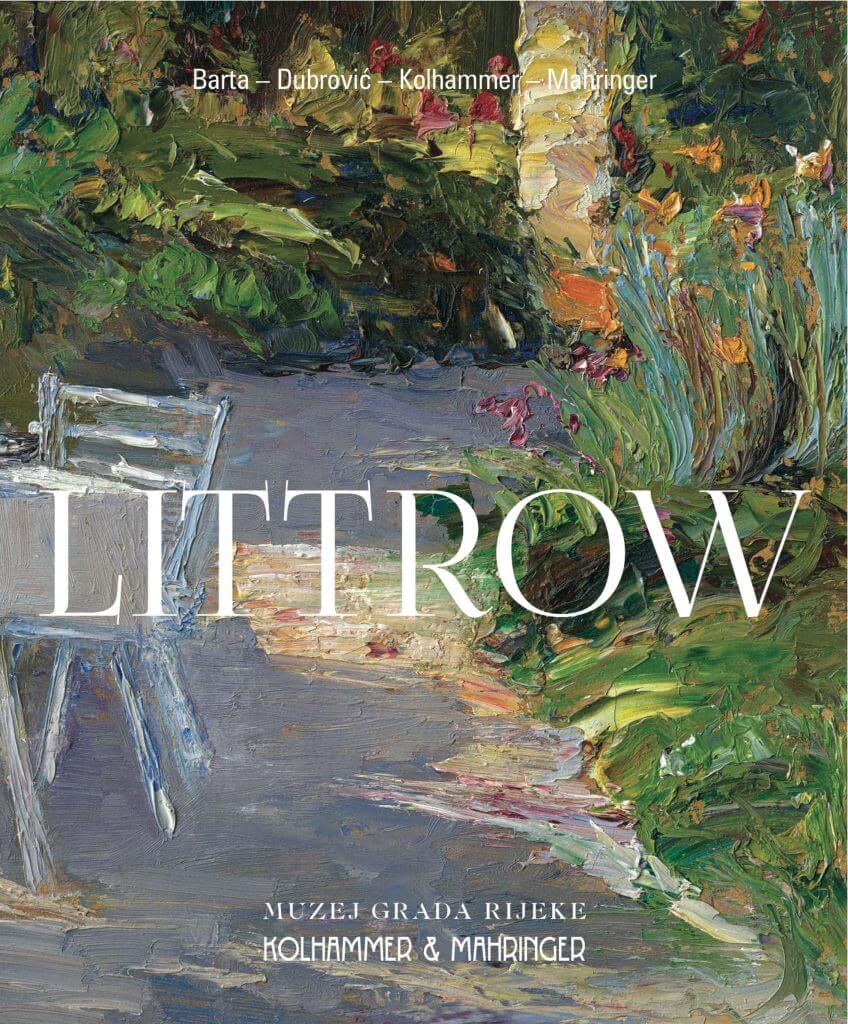
LEONTINE VON LITTROW
Trieste 1856 - 1925 Abbazia

Comprehensive overview of the complete works of a “master of light” who has fallen into oblivion. The complete work is now available for purchase through our gallery.

Read more…

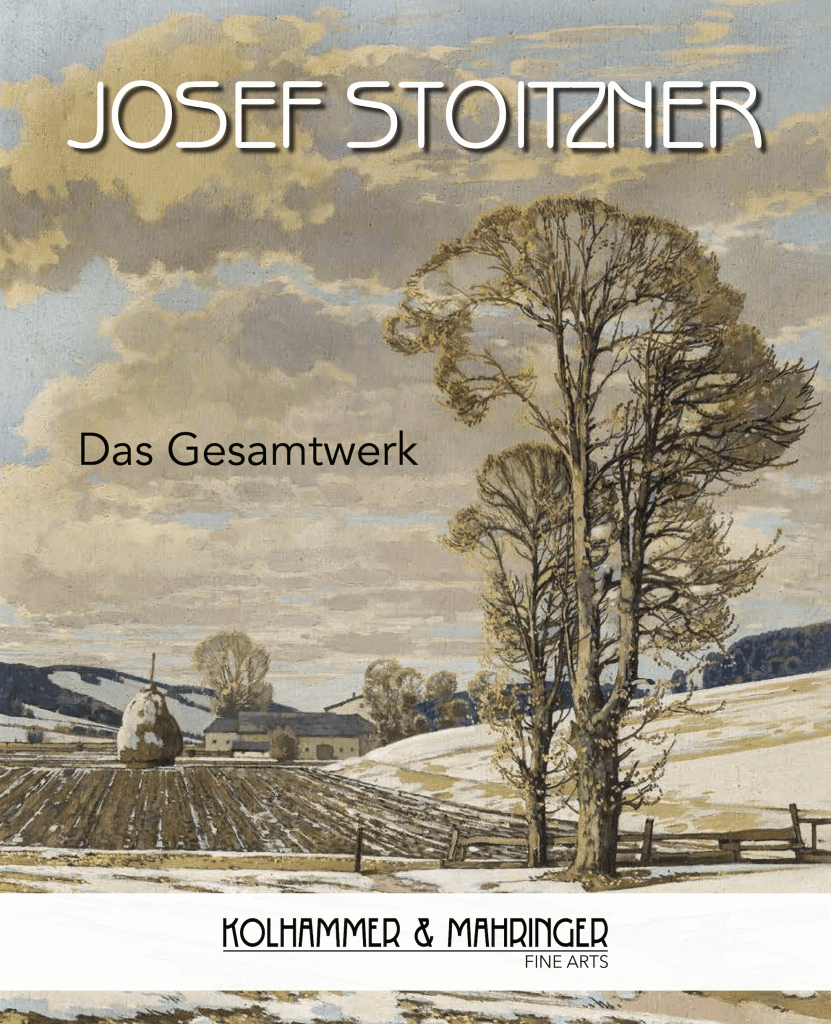
JOSEF STOITZNER
Vienna 1884 - 1951 Bramberg im Pinzgau

Wou, dear lovers and collectors of Josef Stoitzner, the catalog raisonné of Josef Stoitzner is now available for purchase through our gallery. It contains 600 pages with over 1400 illustrations.

Read more…

We buy quality paintings and sculptures and antiques of all periods (antiquity to the present).

Three generations of experience in the art trade at the highest level gives us the opportunity to acquire even significant objects at . We are a serious and discreet partner for single objects, whole collections and estates.

We are looking forward to your contact with our gallery.

Stay informed!

SUBSCRIBE TO NEWSLETTER:

Contact

SHOWROOM SCHÖNBRUNN

Neue-Welt-Gasse 21- 23
1130 Vienna/Austria

Mon – Fri 10.00 to 16.00
and by telephone appointment:
+43 (0) 1 512 25 58

Newsletter subscription

email:
office@kolhammer-mahringer.at